On the exciting morning of November 11, a blue heron momentously circled Dawes Lake after recovering from injury and illness. Arboretum staff, one dedicated Arboretum member and Ohio Wildlife Center staff had gathered there to watch. His long body glided across the water and came to rest in the iconic Dawes Arboretum Hedge Letters. ‘Henry the Heron’ was home at last.
Henry’s journey to that victorious lap around Dawes Lake began in late October when he was discovered by a dedicated member of The Arboretum who was fishing at the lake. They reported it to The Arboretum’s security and the Ecosystems Manager, Emma Farmer, was contacted to investigate.
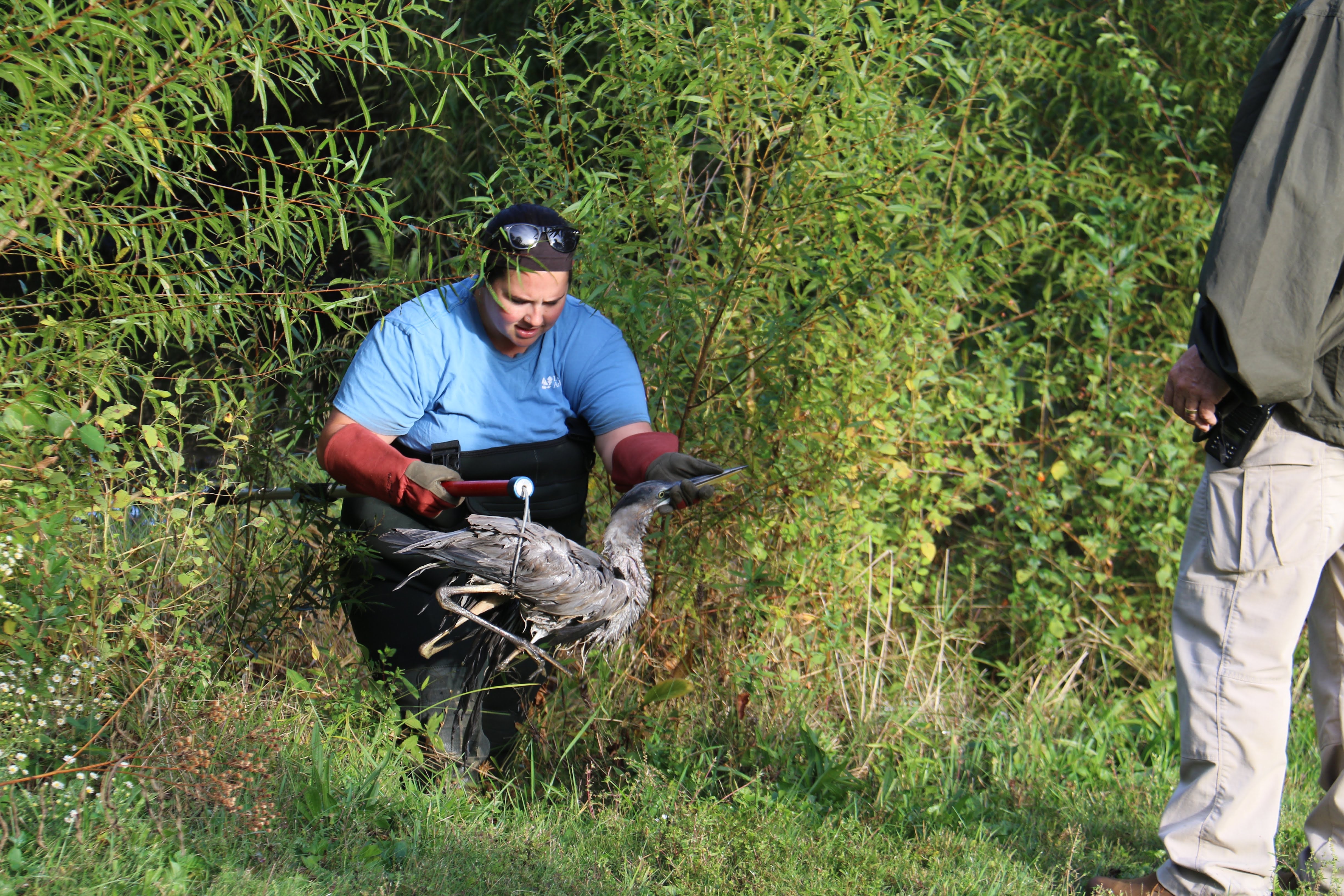
Armed with a catch pole, a wooden stick and waders, Emma and Conservation Assistant, Shea Bramlish, headed down to Dawes Lake to locate and evaluate the heron’s condition. Upon arrival, it was obvious something was wrong with this native resident of the lake.
Up to her thighs in mud, Emma gently helped the heron out of the water to sit on the bank of the lake. The bird was not behaving how a wild animal is expected to by trying to escape. Instead, it just sat there – shivering, exhausted.
The three: Emma, Shea, and the bird rode back to the Science and Conservation building. The heron sat quietly on Emma’s lap – even grasping her finger during the ride.
It was clear that Henry would need care and support to recover. While warming the heron with towels and a space heater on her office floor, Emma reached out to Ohio Wildlife Center, a facility in Central Ohio that has cared for injured wildlife for 40 years.
The center immediately directed the pair to check Henry for bird flu, a highly contagious disease which is a rising concern in Ohio due to deadly outbreaks that can spread like wildfire to wild bird populations as well as domestic poultry. After looking to see if the heron had cloudy eyes, nose discharge and lack of coordination, they were relieved to find this was not what ailed Henry. Ohio Wildlife Center felt confident they could support the heron, who Emma and Shea had coined with the name Henry by this time.
Henry began a journey toward recovery with a drive to the Ohio Wildlife Center and was, in fact, the first passenger in Shea’s new car.
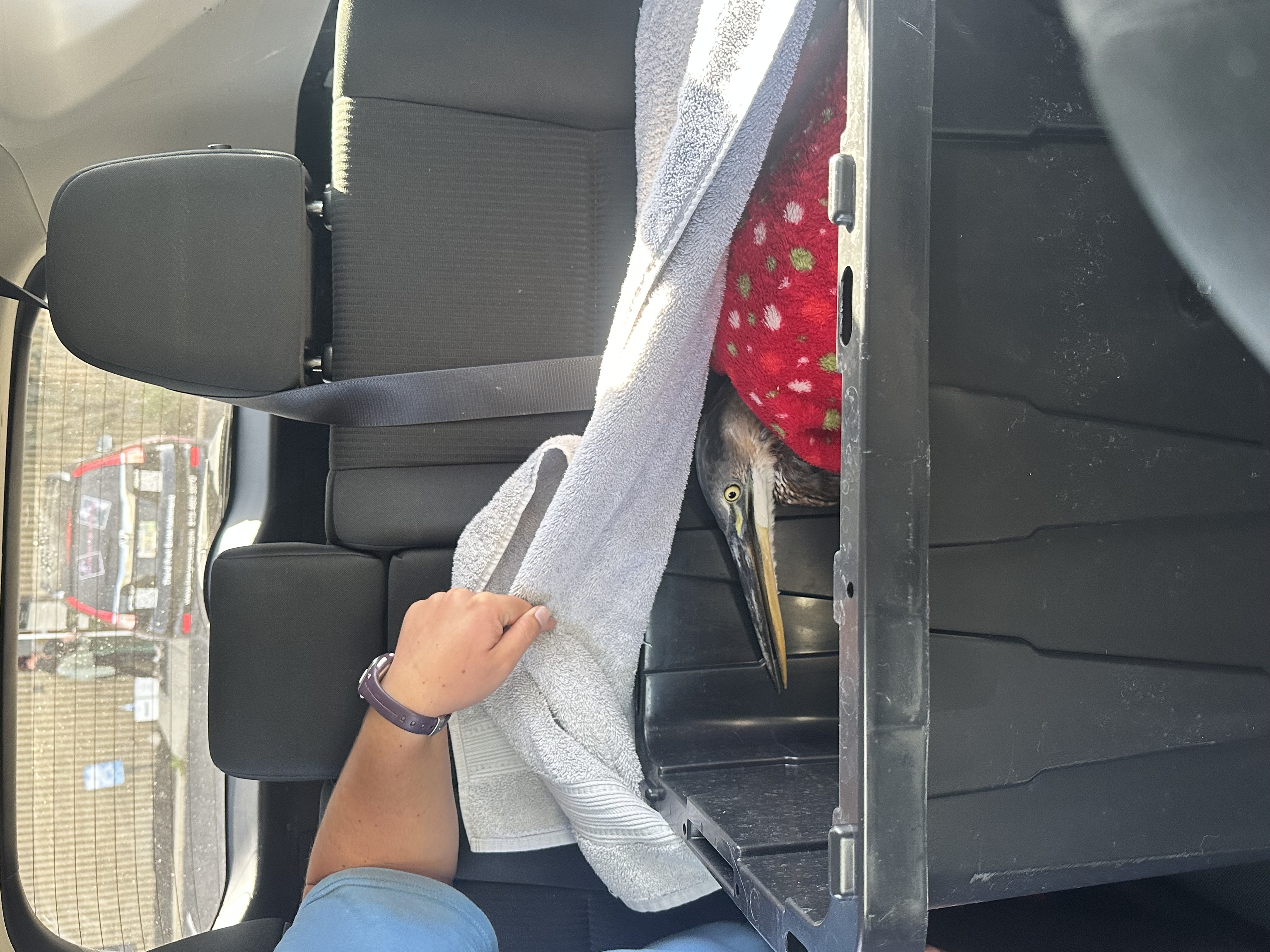
The heron was admitted to the center on October 2. He had a broken toe that needed to be amputated which meant he would have to stay in the center for longer than anticipated as it was a difficult joint to heal.
Dawes staff kept Henry in their hearts, checking in on their recovering resident throughout the weeks it took for him to make his journey back to full health. Emma, Shea and the whole team were thrilled when the Ohio Wildlife Center at last deemed him fit to return home.
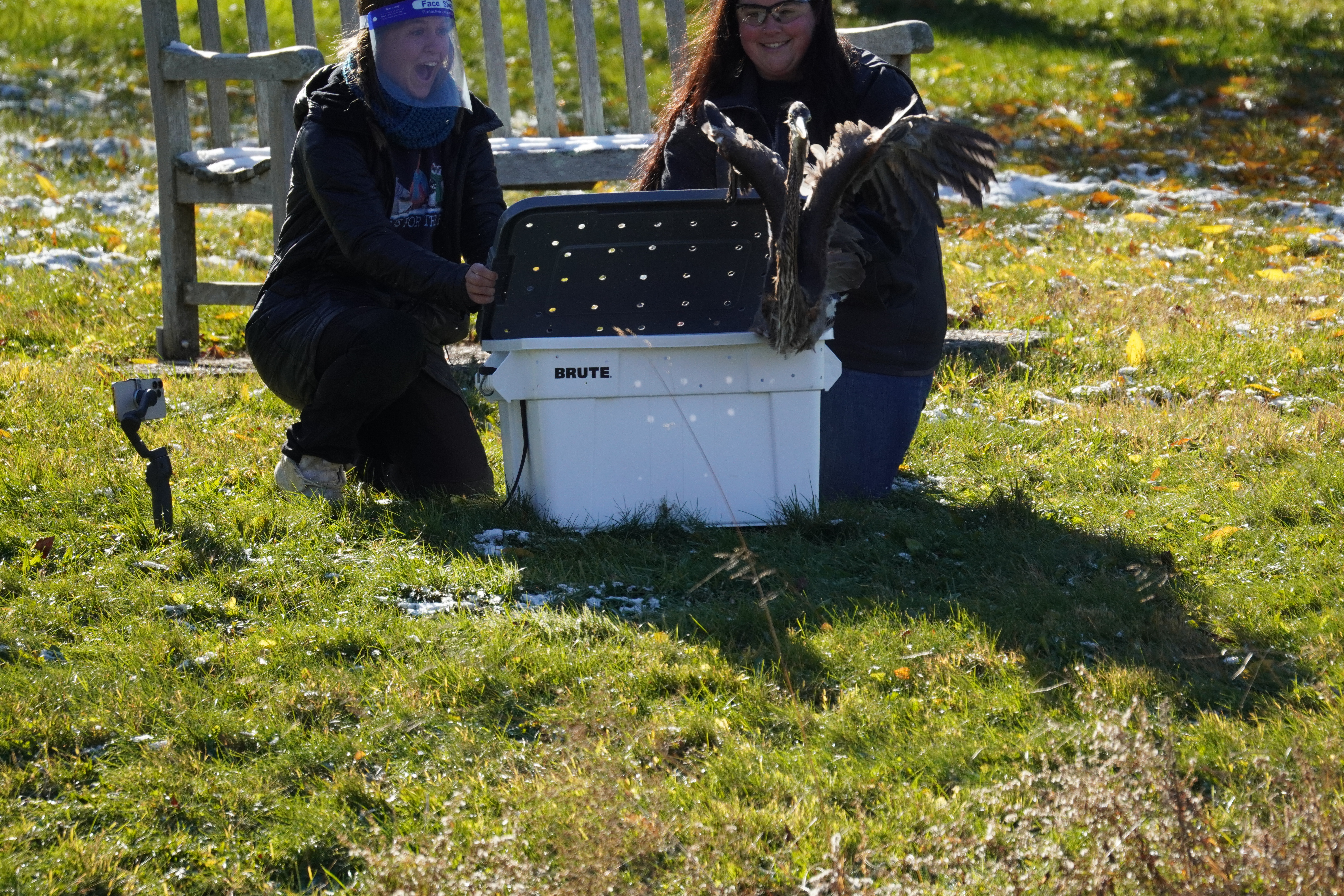
On the morning of November 11, Emma and Shea did the honor of lifting the lid. Henry hesitated for a moment – but then burst forth from his container and took to the skies to do his circle of victory around Dawes Lake.
If there’s one thing that Emma took away from her experience with Henry, it’s that good things can happen, especially when you have dedicated members and staff that work together to support a thriving environment.
Wildlife rehabilitation isn’t always successful and often by the time you can approach wildlife, it may already be too late. Because of this, Emma approached the situation with guarded optimism. After the release, Emma was able to reflect back and see that good things can happen.